Why Do I Have Weeds in My Yard?
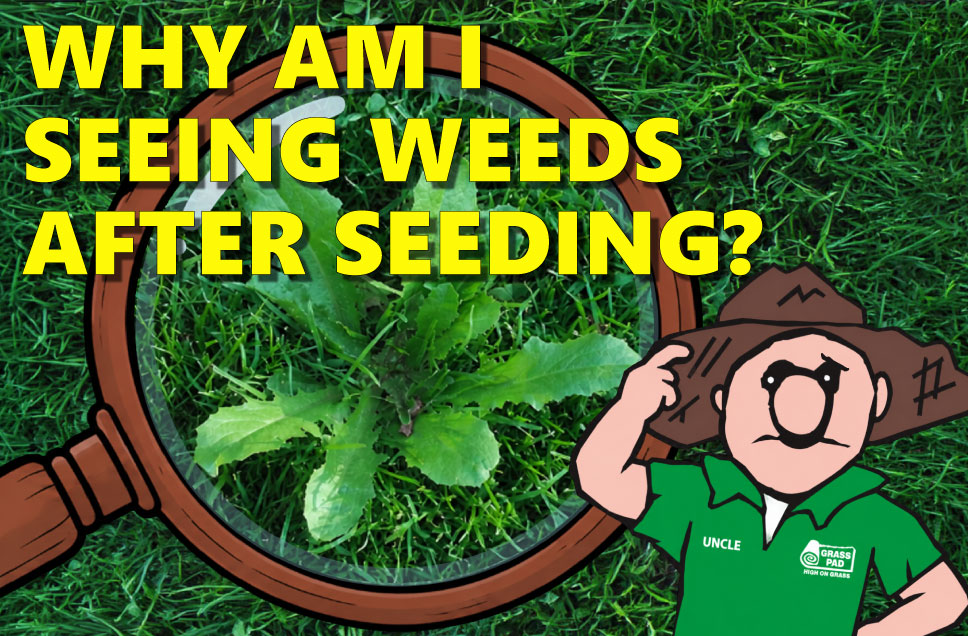
You prepped the lawn. You spread the grass seed. You watered faithfully. So why are weeds showing up alongside your new grass seed?
Each year about mid-way through the fall overseeding season, we will have concerned customers who come in or send us emails telling us, “I followed your fall lawn renovation program; I bought your weed-free grass seed. Where did all these weeds come from?” Not to worry, this is a common problem and Uncle knows just what to do! Read on to see why you’re seeing weeds pop up in your lawn this fall and what to do about it.
Are the Weeds Coming From My Grass Seed?
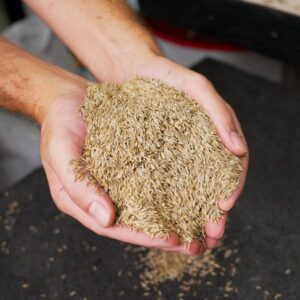
If you got it from us, NO. Here at the Grass Pad we spend a ton of time making sure that the seed we sell has 0.0% weed seed of any kind (including Other Crop & Noxious Weed Seeds). This is not the case with many other seed sellers, and while most grass seed sellers test a 10 gram sample of their grass seed, we demand a 50 gram sample. So always check the seed tag to make sure you’re getting the highest quality seed, and no weeds.
Then Where are the Weeds Coming From?
There are a few ways the weed seeds sprout in your lawn during the fall:
Soil Disturbance – When you aerated, verticut, or even just raked the lawn, you disturbed weed seeds that were already in the ground. These got brought to the surface next to your grass seed.
Outside Materials – Seeding materials such as topsoil and straw may introduce weed seeds, unlike weed-free options such as Primera Field Conditioner and sphagnum peat moss which will not introduce weed seeds.
Watering – After you disturbed the soil and brought these weed seeds to the surface (or added them with topsoil, straw or compost), you started watering frequently. The weed seeds said, “Thank you very much!” and started sprouting.
Fall Conditions – Cool-season weeds (like henbit, clover, dandelions, spurge, etc.) already look to sprout in the cool fall season, so they’re ready for the perfect conditions you’ve provided.
How Do I Get Rid of Weeds Without Harming New Grass?
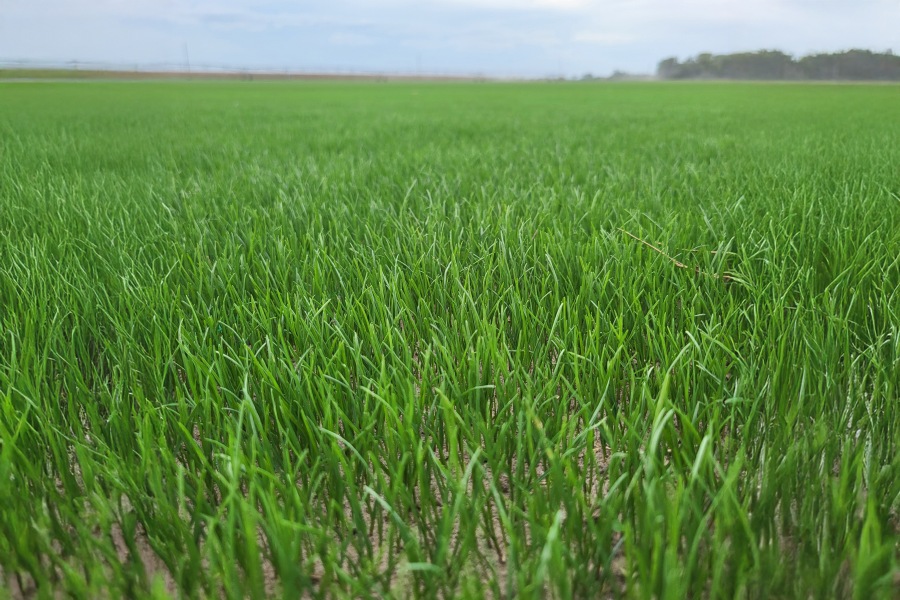
The first step is to get your new grass up and growing – you need the new grass to be mowed 2-3 times before it’s mature enough to handle any weed control. Reminder: you want to mow new grass as soon as it’s tall enough to mow, usually when it’s around 2.5-3″ tall. It depends on when you started your fall seeding process, but generally it’s about 30-45 days after seeding before you can spray weed control on the new grass. However, remember that it’s all dependent on the grass growth, not the timeframe. Get the new grass up and mowed 2-3 times before using weed control.
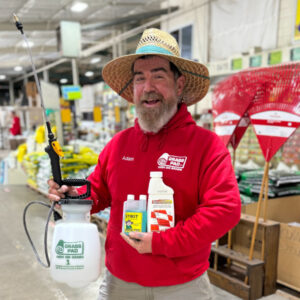
The second step is to grab some SpeedZone and Stikit, mix the two in a pump up sprayer, and go spray the weeds. You only need to spray the weeds that are growing, so you can selectively spray the areas with weed pressure and don’t have to spray the whole lawn. Generally the weeds you’ll see in the fall season are cool-season weeds – things like dandelion, clover, chickweed, spurge – weeds that have a “broad leaf” on them. Remember: the new grass must be up and mowed 2-3 times before it’s safe to control the weeds. Did we say that already?
Why Not Wait Until Spring?
You certainly could wait until spring, but one risk is that the weeds will develop strong roots and crowd out your good grass in the meantime. The cool-season weeds are focused on storing energy in their root system before winter, which makes them more susceptible to herbicide applications. If you can control them in the fall, you’ll have less weed pressure in the spring to deal with. These broadleaf weed controls are effective well into November.
Uncle’s Note: If you see “grassy” weeds, like crabgrass and foxtail, early in the fall seeding season (say, late-September early October) – don’t fret. These weeds don’t like cold weather and will start to die off with the first cool nighttime temps.
The Best Weed Control Is a Thick Lawn
Weed seeds need space and sunlight to grow , so the thicker the grass, the fewer the weeds. When overseeding in the fall, make sure to feed the lawn to promote as much growth from the new seed as possible. The ideal formula is feeding with Renovator (or Golf Course Starter in smaller lawns) during the overseeding process, once again a month later, and then following up at Thanksgiving with Snowman Winter Root Builder.
Subscribe
"*" indicates required fields